


A flag that pops is satisfying. No question about it. But when the wind is cutting across the lake, your holes are spread out, and you are trying to stay warm in the shack, an ice fishing tip up alternative starts making a lot more sense.
Traditional tip-ups still put fish on the ice, and plenty of anglers have used them for decades with good results. But they also come with limits. You have to keep a close eye on them, walk out in the cold to check every flag, and hope the fish is still there by the time you get to the hole. If you fish multiple lines or cover a wider spread, those drawbacks start adding up fast.
That is why more anglers are looking beyond the standard spool-and-flag setup. The goal is not to replace what works just for the sake of change. It is to find a system that fits the way modern ice anglers actually fish - more efficiently, more comfortably, and with better hook-setting consistency.
What Makes a Good Ice Fishing Tip Up Alternative?
A real alternative has to do more than just look different. It needs to solve the weak spots that come with a standard tip-up.
First, it should help you fish multiple holes without forcing you to stand over every one of them. Second, it should improve the timing of the hook set. A lot of missed fish happen in the gap between seeing a flag and reaching the hole. Third, it should let you stay warmer and fish longer, especially when conditions are rough.
That last point matters more than some anglers admit. When it is below zero and the wind is moving, nobody wants to sprint across the ice every ten minutes just to find a bait stolen or a false trip. Good gear should work with you, not wear you out.
Why Standard Tip-Ups Still Have a Place
To be fair, tip-ups are simple, proven, and legal in many states where multiple lines are allowed. They are easy to understand, easy to pack, and they do not need much maintenance. For deadstick presentations, live bait, and set-it-out coverage, they remain useful.
But useful is not the same as ideal.
A standard tip-up depends on you to finish the job. The fish takes the bait, the flag trips, and now the next part is on your timing. If the fish drops the bait before you get there, you lose. If you set too early or too late, you lose. If you are inside a shelter trying to stay warm, you are already behind the fish.
That is the core issue many anglers are trying to solve.
The Main Types of Ice Fishing Tip Up Alternative Options
When anglers search for an ice fishing tip up alternative, they are usually looking at one of three paths.
Rod Holders and Deadstick Setups
A rod holder with a deadstick rig is one of the simplest options. Instead of a tip-up spool, you fish with a standard rod and reel placed in a holder near the hole. This can give you better line control, easier drag adjustment, and a more familiar fight once you grab the rod.
The trade-off is that you still need to get to it. Some holders offer a strike indicator or light trigger, but they do not solve the delay between bite and hook set. They can work well in a small spread or inside a shelter, but they are not always the best answer for anglers trying to manage several holes at once.
Jaw Jackers and Automatic Hook-Setting Devices
This is where things get more interesting. An automatic hook-setting device uses a rod and reel but adds a trigger system that sets the hook when a fish takes the bait. That changes the whole equation.
Instead of relying on a flag and a foot race, the hook is driven home immediately when the strike happens. For species that mouth a bait and move off fast, that timing can be a major advantage. It also lets anglers fish from inside a shelter instead of hovering outside over every line.
For many serious anglers, this is the most practical upgrade from a tip-up because it does not just signal a bite - it acts on it.
Electronic Strike Alerts
Some anglers experiment with electronic alarms or strike sensors. These can help with visibility and can be useful at night or in poor weather. But an alert is still just an alert. It does not set the hook, and it still requires you to react fast enough to make the opportunity count.
That does not make them useless. It just means they solve a smaller part of the problem.
Where Automatic Hook Setters Stand Out
If your priority is landing more fish while staying warm and fishing efficiently, automatic hook-setting systems deserve a hard look.
They combine the control of a rod and reel with the hands-off coverage anglers want from a tip-up. That matters because a fish on a rod is often easier to manage than hand-lining from a traditional tip-up, especially with lighter bites or more cautious fish.
They also reduce wasted movement. On a long day, every unnecessary trip out of the shack chips away at your focus and comfort. If you are fishing with kids, older anglers, or anybody who would rather not run around on glare ice in heavy boots, the value is even clearer.
An automatic system is not magic. You still need to match your rod, line, bait, and trigger tension to the species and conditions. But when it is dialed in, it gives you a cleaner, faster response than a flag system ever can.
Choosing the Right Ice Fishing Tip Up Alternative
Not every angler needs the same setup. What works best depends on how you fish.
If you stay mobile, hop holes all day, and rarely sit in a shelter, a traditional tip-up or a simple deadstick may still be enough. If you fish set lines while jigging another hole nearby, a rod holder setup might cover the basics.
But if you fish in cold weather, run multiple holes, or want a better chance at solid hook sets without standing over every line, an automatic hook-setting device is often the better tool.
Look at build quality first. Ice gear takes abuse. Springs, triggers, brackets, and hardware all need to handle cold, moisture, and repeated use. Cheap components may save a few dollars upfront, but they tend to show their weakness fast on the ice. Reliability matters more than gimmicks.
You also want adjustability. Light-biting panfish and aggressive pike do not hit the same way, and your trigger system should reflect that. A one-size-fits-all setup usually means compromise.
Finally, think about where and how the product is made. Purpose-built, American-made gear backed by people who actually fish carries more weight than imported knockoffs built to chase a price point. In a category this specific, experience matters.
Efficiency Matters More Than Ever
A lot of ice anglers are not looking for novelty. They are looking for efficiency.
That means more productive time, fewer missed opportunities, and less time fighting the elements for no reason. When a piece of gear lets you monitor several presentations, stay inside your shelter, and get a quicker hook set, it is not a luxury item. It is a better system.
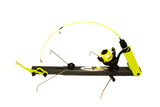
That is exactly why products like the Happy Hooker have earned attention from anglers who are done settling for flags alone. It was built to solve a real problem on the ice: how to fish multiple holes more effectively without giving up warmth or hook-setting speed. That kind of practical thinking is what separates a real alternative from another gadget.
The Best Choice Depends on What You Want to Fix
If your biggest frustration is visibility, an alert-based system may help. If you want a rod-and-reel presentation instead of a spool, a deadstick holder can be a step forward. But if the real problem is lost fish, constant running, and freezing outside while you wait on flags, then the best ice fishing tip up alternative is the one that reacts when the fish does.
That is the difference between being notified and being ready.
Ice fishing has always rewarded anglers who adapt. Conditions change. Fish behavior changes. Good gear should keep up. If your current setup leaves you chasing flags, missing bites, and spending more time in the cold than you need to, it may be time to stop asking whether tip-ups still work and start asking whether there is a better tool for the job.
The right answer is usually the one that helps you stay focused, stay warm, and turn more bites into fish on the ice.