


When a tip pops, the fish is there for a reason. If you keep coming up with an empty hook, the problem usually is not luck. The way to improve hook set ratio ice fishing is to tighten up the whole system - line, rod, bait, hook, and timing - so the fish gets steel cleanly and stays pinned.
Why your hook set percentage drops on the ice
Ice fishing exposes weak points fast. You are working in cold conditions, often with light line, small baits, and short strike windows. Add gloves, a shelter, multiple holes, and fish that sometimes just mouth a bait, and missed fish start stacking up.
A poor hook set ratio usually comes from one of three things. Either the fish never fully took the bait, the hook point never found purchase, or the angler reacted too late or too hard. That last part matters more than many anglers want to admit. A violent hook set on a tiny tungsten jig and soft-mouthed panfish can cost fish just as easily as a slow reaction on a walleye deadstick.
The fix is not one magic trick. It is matching your gear and your response to the fish you are targeting.
Improve hook set ratio ice fishing by matching tackle
The fastest way to miss fish is to fish an unbalanced setup. If the rod is too stiff, the fish feels resistance early. If it is too soft, you may not move enough line or drive the hook home. If the hook is oversized for the bait, fish short-strike it. If the line has too much stretch, your hook set gets mushy.
Start with the rod action
For panfish and perch, a light or ultralight rod with a responsive tip gives you the best read and enough cushion to keep tiny hooks from tearing free. For walleyes, a medium-light rod is often the sweet spot. It has enough backbone to move the hook, but still lets the fish load the blank before you commit.
A lot of missed fish come from using one rod for everything. That may be convenient, but it costs fish. If you want better results, build each setup around the species, lure size, and presentation.
Watch your line choice
Line affects hook penetration more than many anglers realize. Monofilament is forgiving and handles cold well, but it stretches. That stretch can be helpful on close-range fights with small hooks, yet it can also soften the hit when you need to drive a hook at depth.
Braid with a fluorocarbon leader gives better sensitivity and faster power transfer, especially for walleyes and larger fish. The trade-off is that braid can be less forgiving with light bites and finicky fish, and it demands a properly set drag. If your drag is too tight, you may rip hooks free. If it is too loose, you will get the hit and never finish the job.
Sharpen or replace hooks sooner
This one is simple and often ignored. Ice, sand, hole edges, and repeated fish all dull points. A hook can look fine and still be too rounded to bite cleanly. If a point does not grab your thumbnail immediately, touch it up or replace it.
On the ice, small differences matter. A sharp hook turns a soft upward sweep into a landed fish.
Bait and lure size matter more than most anglers think
If fish are grabbing short, they are telling you something. Usually the profile is too large, the bait is not hanging right, or the hook gap is crowded.
Downsize when fish are nipping
When you see bites but cannot connect, go smaller before you change spots. Panfish in particular will peck at a waxworm or plastic tail without inhaling the whole presentation. A smaller jig, shorter plastic, or trimmed live bait often fixes the problem fast.
For walleyes and pike, short-striking can mean they are hitting the tail of a minnow or just stunning it before turning back. In those situations, changing hook placement, reducing bait size, or adjusting how the minnow hangs can raise your conversion rate.
Keep the hook gap clear
Too much bait on too little hook kills hook sets. If your spike, waxworm, minnow head, or plastic body is balled over the point, you are asking the fish to push through extra material before the hook can stick. Thread bait so the point stays exposed and the lure hangs naturally.
That is especially true with finesse presentations. A clean hook gap gives you more room for error when the bite is light.
Timing the hook set under the ice
Not every fish should be hit the same way. Timing depends on species, presentation, and how the fish is taking the bait.
For aggressive jig bites, stay quick
If you are jigging spoons, raps, or active tungsten for fish that are clearly committing, a quick upward sweep usually works best. You are not trying to cross their eyes. You are taking up slack and driving the point with control.
Many anglers miss because they make too big a move. In a small hole with short line out, a compact snap is often all you need.
For deadsticks and live bait, let the fish load the rod
A fish taking a live minnow on a deadstick often needs a second to turn and settle the bait. If you swing the instant the spring bobber twitches, you may pull it away. Watch for steady pressure, a deeper load, or line movement that tells you the fish actually has it.
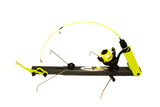
This is where automatic hook-setting devices can shine for anglers running more than one line from the shelter. A properly set system can react faster and more consistently than cold hands, especially when you are tending multiple holes. The key is proper tension and species-specific adjustment. Too much force on light-biting fish can work against you. The right amount delivers fast, repeatable hook sets while you stay warm and fish efficiently.
Detecting bites sooner improves hook set ratio ice fishing
You cannot set the hook on what you do not see. Better bite detection leads to better timing, and better timing lands more fish.
Use spring bobbers and strike indicators where they make sense
For bluegills, crappies, and negative-bite perch, a spring bobber can show the slight up-bite or slack-line take that a rod tip misses. If fish are rising with the bait, your signal may be the jig suddenly feeling weightless. Without a sensitive indicator, that fish is gone before you react.
For deadsticks, visual strike indicators help when you are watching electronics, helping a kid, or working another line. Good systems reduce delay. Delay costs fish.
Stay organized when fishing multiple holes
A lot of missed hook sets happen because the angler was simply out of position. If you spread too far, stack gear around your holes, or cannot move cleanly inside the shelter, your response time suffers. Keep your active setups where you can reach them quickly and safely.
Efficiency matters. So does comfort. When you are warm, alert, and not fumbling with gloves and clutter, you hook more fish. That is just the truth.
Set your drag and hook set force for the fish, not your ego
There is a difference between a firm hook set and a reckless one. Big hook sets look good in open water videos. Through the ice, with light line and compact gear, they often do more harm than good.
For panfish, a crisp lift is enough. For walleyes, use a controlled sweep and keep pressure steady. For pike, especially with larger hooks and quick-strike rigs, you need more authority, but you still want the drag set to protect your line and leader connection once the fish runs.
If fish are coming off halfway up, your initial hook set may be fine, but your drag, rod load, or line tension may not be. Keep steady pressure and avoid pumping fish too aggressively in the hole. The fight does not end until the fish is clear of the ice edge.
Small adjustments that add up fast
Sometimes the answer is not major re-rigging. It is a few field-tested corrections. Keep slack out of your line when jigging. Recheck knot strength after every good fish. Clear ice from guides so line moves freely. Make sure your hook point is not fouled after every drop. If fish are only bumping the bait, pause longer or reduce jigging cadence instead of constantly moving it away from them.
Pay attention to what the fish are actually telling you. A day of soft up-bites calls for finesse, sensitivity, and patience. A day of crushing rips lets you fish faster and hit sooner. The anglers who consistently catch more are not guessing. They are adjusting.
If you want to improve hook set ratio ice fishing, stop treating missed fish like bad luck. Build a balanced setup, use sharp hooks, keep bait compact, and match your timing to the bite. Gear that helps you respond faster and fish multiple holes efficiently has a real place too, especially when winter weather pushes you into the shelter. Thresher Innovations was built around that kind of practical problem-solving - helping serious anglers stay warm, stay ready, and miss fewer fish when the flag, tip, or trigger finally goes.
The next time you feel that tap and come back empty, do not just rebait and hope. Change one thing with purpose, and make the fish prove you wrong.