


The best ice shelter efficiency example is not packing more gear into the house. It is building a setup that lets you stay warm, watch productive water, and respond when a fish bites without spending the day running hole to hole in the wind.
A shelter can become the command center of your day on the ice. When it is set up right, it protects you from the weather while your gear helps you cover the water around it. That means less wasted movement, better attention to your electronics and lines, and more time spent where the fish are actually feeding.
An Ice Shelter Efficiency Example for Real Anglers
Picture a midwinter basin bite. You have found fish moving along a transition from 18 to 24 feet, but they are not holding in one tight spot. A single hole in the shelter shows occasional marks. Two holes outside the shelter, set along the break, show more activity but require you to step into the cold every time you want to check a rod.
The inefficient approach is simple: drill a hole, fish it by hand, then move when activity slows. You may catch fish, but you are constantly choosing between staying warm and covering more water. On a tough day, that tradeoff costs opportunities.
A more efficient setup puts your shelter near the center of the pattern. Fish your primary hole inside with the rod and presentation that need the most attention. Place additional lines in nearby holes where fish travel, using purpose-built automatic hook-setting devices where legal. The outside holes become working coverage, not forgotten rods freezing in the slush.
When a fish takes a bait, you can step out, land it, rebait, and return to warmth. Your shelter remains the base camp. The goal is not to turn fishing into a machine. The goal is to remove the dead time that comes from trying to watch every hole by yourself.
Why More Coverage Matters
Fish do not always feed directly beneath the hole where you are sitting. Crappies roam. Walleye slide a break at low light. Pike patrol edges. Even bluegills can shift just far enough off a colony that one hole stops producing while another starts.
A shelter allows you to fish comfortably, but comfort alone does not equal efficiency. The gain comes from pairing shelter comfort with a plan for covering likely travel routes. Three well-placed holes around a shelter can tell you far more about a bite than one hole drilled at random.
For example, set one line shallow on top of a break, one at the transition, and one deeper where fish may stage. Keep your active jigging presentation in the shelter where you can watch sonar, experiment with cadence, and react quickly. The stationary lines help identify where the fish are moving, while the active line helps you convert curious fish into bites.
This approach works best when the holes are close enough for a quick check but far enough apart to cover different water. In many situations, a 10- to 30-yard spread makes more sense than placing every hole within a few feet. The right distance depends on species, structure, lake pressure, visibility, and the limits of your local regulations.
A Practical Setup Around the Shelter
Start by drilling before you pop the shelter when possible. Find the contour or weed edge first, then place the shelter where it gives you protection without sitting directly on every important hole. Wind direction matters. Set the door and your travel path so you are not fighting a wall of snow and a gust every time a flag or hook-setting device fires.
Keep the outside stations simple. Use enough weight to hold bottom or maintain your target depth. Choose baits that can soak effectively, and use tackle sized for the species you expect. A complicated outside setup may look impressive, but it can waste time when a fish is on.
Inside the shelter, keep your active gear organized. Your sonar, tackle, scoop, heater controls, and rod should have a home. A cluttered floor is more than an annoyance when you need to move fast. It can cost a fish, damage a rod, or put a hook where it does not belong.
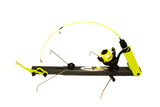
The Happy Hooker from Thresher Innovations is designed for this kind of practical coverage: it automatically sets the hook so anglers can fish multiple holes more efficiently while staying warm in the shelter. Like any specialized ice gear, it works best when it is positioned securely, adjusted for the tackle being used, and checked regularly throughout the day.
Efficiency Is Not the Same as Fishing Too Far Away
There is a limit to every setup. If your outside holes are so far away that you cannot reach them promptly, you have created more work rather than more efficiency. If the wind is severe, visibility is poor, or ice conditions are changing, tighten your spread and keep safety ahead of convenience.
Line rules matter, too. States and waters can set different limits on the number of lines, hook types, devices, and unattended equipment allowed. Know the regulations before you set additional rods, and stay close enough to comply with them. Good sportsmen protect the resource and respect the rules that keep the fishery fair.
Efficiency also depends on bite quality. During an aggressive walleye window, several nearby lines can help you capitalize fast. During a finicky panfish bite, one carefully managed rod and a subtle jigging program may outperform every extra hole. The right approach is the one that matches the conditions, not the one with the most equipment on the ice.
Make the Shelter Work Harder
Heat is one of the biggest reasons anglers retreat to the shelter, but it should not become the reason you lose track of the bite. Position a chair so you can see your active rod, electronics, and the most likely approach to your outside holes. Keep boots, gloves, and outer layers ready for quick trips instead of buried under a pile of gear.
A clear routine helps. After landing a fish, rebait the line, inspect the knot and hook, clear ice from the hole, and reset the device or rod in the same order every time. That consistency cuts down on preventable mistakes when the action picks up.
It also pays to check the holes themselves. Slush, skim ice, and snow can interfere with line movement and make it harder to see a strike indicator. A quick pass with the scoop keeps each station ready. In bitter weather, this small bit of maintenance can be the difference between a clean hook-set and a missed chance.
Built for Better Time on the Ice
A well-run shelter setup gives you something every angler wants: more useful minutes. You are not standing in the open simply because the best hole is outside. You are not ignoring an active travel lane because you cannot watch another rod. You are using the shelter for what it should be - protection, organization, and a base for smarter fishing.
Made-in-the-USA gear earns its place when it solves a real problem in real conditions. Look for equipment built for cold hands, fast resets, repeated use, and the hard miles of a full season. Cheap copies may look close in a product photo, but dependable construction shows up when temperatures drop and a good fish takes the bait.
Set your shelter with purpose on your next trip. Cover the water that matters, keep your active presentation close, and give every hole a job. The fish may still make you work for them, but there is no reason to make the cold work harder than it has to.