
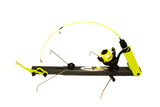


A fishing trigger guide matters most when the bite is light, the wind is cutting across the lake, and you are trying to keep more than one hole productive. An automatic hook-setting device is not a shortcut around good fishing. It is purpose-built equipment that helps turn a committed bite into a clean hookset while you manage lines, watch a flasher, or stay warm in the shelter.
For serious ice anglers, the value is simple: more efficiently fished holes, fewer missed fish, and less time standing over every rod waiting for a flag or a rod tip to move. The key is choosing a dependable trigger, setting it correctly, and using it within the regulations where you fish.
What a Fishing Trigger Does
A fishing trigger is the release mechanism in an automatic hook-setting system. You bait the hook, place the rod in the device, bend the rod to load tension, and set the line into the trigger. When a fish takes the bait and pulls line with enough force, the trigger releases. The rod springs upward and drives the hook home.
That controlled hookset is what separates a quality automatic device from simply propping a rod over a hole. Fish often mouth a minnow, inhale a small jig, or make a quick sideways run before an angler can reach the rod. A properly adjusted trigger reacts at the moment that movement becomes a real take.
The equipment still depends on sound angling. You need the right hook, bait, depth, line, and presentation for the species you are targeting. What the trigger does is reduce the gap between a bite and a hookset.
Why Trigger Adjustment Makes the Difference
A trigger that is too sensitive can fire from a shiner swimming hard, a gust of wind, or line drag at the hole. A trigger set too heavy may let a fish carry the bait without releasing the rod. Neither situation helps your catch rate.
The correct setting depends on bait size, water conditions, rod action, target species, and how fish are feeding that day. There is no single position that works everywhere. Panfish taking tiny baits usually call for a lighter setting than northern pike striking a large sucker. A walleye with a cautious bite may also require a lighter release than an aggressive lake trout.
Start by setting the trigger light enough that a deliberate pull on the line releases it consistently, but heavy enough that the bait cannot trip it on its own. Then watch what happens. If you see baitfish activity or false releases, add a little resistance. If you find pulled bait or miss fish that have clearly taken line, back the trigger off.
This is a field adjustment, not a one-time decision. The anglers who get the most from automatic hook-setting gear are willing to tune it as conditions change.
How to Set an Automatic Hook-Setting Device
Before fishing, make sure your device is stable on the ice and positioned so the line runs cleanly into the hole. Ice chips, a sharp hole edge, or a rod angle that pulls the line sideways can interfere with a clean release.
Load the Rod With the Right Amount of Tension
The rod provides the hook-setting force. Bend it enough to create a decisive snap when the trigger releases, but do not load it so severely that light line breaks or a small hook tears free. A moderate-action rod is often a practical choice because it has enough backbone to set the hook while retaining some forgiveness during the fight.
A stiff rod can work well for larger baits and bigger fish, but it comes with trade-offs. Too much force can rip a bait away from a finicky walleye or open a small hole in soft-mouthed fish. Match the rod, line, and hook to the fish you expect to catch.
Set the Line in the Trigger
After loading the rod, place the line in the trigger according to the device instructions. The line should be free of ice and should not be pinched so tightly that it frays or hangs up. Check that the spool turns freely and that your drag is set appropriately.
If you are fishing a live bait rig, give the bait enough room to move naturally. A bait that is tangled, trapped against the bottom of the hole, or dragging excess line may create false signals and fish poorly regardless of how well the trigger is adjusted.
Test Before You Walk Away
Do not assume a trigger is ready because it clicked into place. Pull the line gently by hand and confirm that it releases cleanly. Watch the rod path as it fires. It should snap upward without hitting the device, shelter wall, bucket, or another rod.
That quick test can save a wasted hour. It also lets you identify problems before a fish does, such as a frozen guide, a line wrapped around the rod tip, or a trigger set too heavy.
Match Your Fishing Trigger Setup to the Bite
For walleye, a light-to-medium trigger setting is often the better starting point. Walleyes can be notorious for picking up bait, holding it, and moving just enough to test an angler's patience. Use sharp hooks, keep your bait presentation clean, and avoid overpowering the setup. If fish are striking aggressively at dawn or dusk, you can add a touch more trigger resistance.
For northern pike, use heavier line, a properly matched leader where allowed and appropriate, and a trigger setting that handles larger live bait. Pike can hit hard, but the point is not just to handle a violent strike. It is to ensure the device fires when the fish commits, without releasing every time the bait surges beneath the ice.
For perch, crappies, and other panfish, an automatic hook-setting device may be useful when local rules allow it, especially if you are tending multiple legal lines. Lighter tackle calls for a gentler approach. Small hooks and light line leave little room for excessive rod tension.
Lake trout and other active predators can demand a different approach altogether. If fish are moving quickly and hitting hard, prioritize line management and a clear area around the hole. A triggered rod is only useful if you can get to it safely and fight the fish without tangling neighboring setups.
Common Problems That Cost Fish
False trips are usually caused by too-light trigger adjustment, oversized bait, wind exposure, or line friction. Start with the basics: clear ice from the hole, make sure the line is running straight, and confirm the bait is not snagging structure below the ice.
Missed hooksets often come from dull hooks, too little rod load, a trigger that releases late, or bait positioned poorly on the hook. Fresh bait and sharp hooks solve more problems than most anglers want to admit. If the rod fires but fish are not hooked, inspect the point before changing everything else.
Frozen equipment deserves attention as well. Moisture can freeze around line guides, reel components, and moving parts. Keep the mechanism clean, knock off snow before it melts into the device, and inspect it during the day. Durable gear should be built for winter, but every piece of equipment performs better when it is maintained.
Fish More Holes Without Losing Control
The real advantage of automatic hook-setting gear is coverage. A device such as the Happy Hooker can help anglers work multiple holes while remaining close enough to respond when a rod fires. That can mean tending a jigging rod inside the shelter while a live-bait setup works outside, or spreading legal lines across a productive break without neglecting any of them.
More coverage does not mean abandoning your equipment. Stay within the attendance requirements for your state, keep your fishing area organized, and position setups where you can reach them quickly. Check local regulations before every trip because rules on hook-setting devices, line limits, hook styles, and unattended gear vary by location and can change.
State Regulation Note — Minnesota: Minnesota allowed hook-setting devices beginning with the 2025–26 ice-fishing season. For the official announcement, see the Minnesota Department of Natural Resources. As with all states, regulations can change; always verify current local rules before your trip.
Give each rod a job. One hole may hold a suspended minnow over a weed edge, another may fish just off bottom on a transition, and a third may be a jigging hole you actively work. A trigger device is most useful when it supports a deliberate plan rather than adding random lines to the ice.
Choose Reliability Over Cheap Imitations
A fishing trigger spends its working life in freezing temperatures, wet snow, wind, and repeated spring tension. That is not the place for weak components, rough release surfaces, or a design that is difficult to adjust with cold hands.
Look for a device with a repeatable trigger, solid construction, clear setup instructions, and parts that hold up through seasons of use. American-made gear is worth considering when build quality, direct product support, and accountability matter to you. A bargain copy that misfires or fails when the bite is on is not a bargain.
The best test is simple: set it, pull the line, and watch the rod fire. When that release is smooth and predictable, you can spend less time worrying about your gear and more time paying attention to the lake. Set your trigger with care, keep your hooks sharp, and let every hole have a fair chance to produce.